CALL US TODAY

331-253-2426

Surgery Or Physical Therapy

What Causes Lower Back and Hip Pain? Tips for Relief

What Causes Lower Back and Hip Pain? Tips for Relief

Lower back and hip pain can be caused by muscle strain, nerve irritation, joint problems, injuries, or conditions affecting the spine and hip connection. Because the lower back and hips work together through shared muscles, joints, and nerves, problems in one area can often create pain in the other. Common causes of lower back and […]

What Causes Lower Back and Hip Pain? Tips for Relief Read More »

Runner’s Knee vs Jumper’s Knee: What is the Difference?

Runner’s Knee vs Jumper’s Knee: What is the Difference?

What is the difference between runner’s knee and jumper’s knee? Runner’s knee and jumper’s knee are different knee injuries that affect separate structures. Runner’s knee typically involves pain around the kneecap due to movement or tracking issues, while jumper’s knee affects the patellar tendon below the kneecap due to repetitive stress. Key Takeaways: Runner’s knee

Runner’s Knee vs Jumper’s Knee: What is the Difference? Read More »

Causes of Burning Pain in Shoulder and How To Treat It

Causes of Burning Pain in Shoulder and How To Treat It

Burning pain in the shoulder can be caused by problems involving the muscles, tendons, nerves, joints, or surrounding tissues. Common causes include rotator cuff injuries, nerve irritation, shoulder bursitis, arthritis, and referred pain from the neck. The estimated prevalence of shoulder pain varies considerably, ranging from 1% to 66%. Among the various types of shoulder

Causes of Burning Pain in Shoulder and How To Treat It Read More »

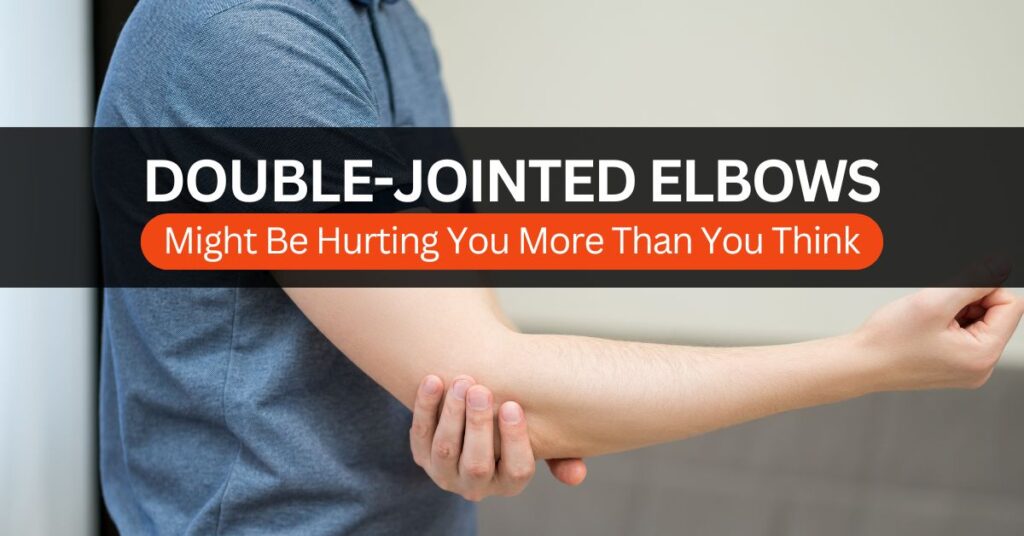
Double-Jointed Elbows Might Be Hurting You More Than You Think

Double-Jointed Elbows Might Be Hurting You More Than You Think

You might think having double-jointed elbows is just a quirky trait. But if your elbows bend further than they should, it could be a sign of something more serious.

Hypermobility can feel like a cool party trick, but it often comes with pain, instability, and even injuries. Many people with overly flexible joints don’t realize they might have Ehlers-Danlos syndrome (EDS) or generalized hypermobility spectrum disorder (HSD).

EDS affects the connective tissues that support your joints, skin, and organs. When your body doesn’t produce strong collagen, your joints become too loose. This can lead to:

– Frequent joint pain or dislocations
– Unstable movement that causes injuries
– Chronic fatigue from overworked muscles trying to compensate
– Digestive or cardiovascular issues in more severe cases

If your elbows hyperextend, it’s worth paying attention to other symptoms. Ignoring the signs can lead to long-term joint damage and chronic pain. Understanding the connection between hypermobility and EDS can help you take control of your health before symptoms worsen.

Double-Jointed Elbows Might Be Hurting You More Than You Think Read More »

Best Exercises for Diastasis Recti: Empowering Women's Health

Best Exercises for Diastasis Recti: Empowering Women’s Health

The best exercises for diastasis recti include diaphragmatic breathing, abdominal bracing, pelvic tilts, heel slides, toe taps, and controlled core exercises that help rebuild abdominal strength and improve core stability. These movements focus on activating the deep core muscles, including the transverse abdominis and pelvic floor, while reducing unnecessary pressure on the abdominal wall. Diastasis

Best Exercises for Diastasis Recti: Empowering Women’s Health Read More »

Recognizing Signs Sciatica is Improving & 3 Phases of Recovery

Recognizing Signs Sciatica is Improving & 3 Phases of Recovery

Sciatica symptoms can be life-altering, often causing acute pain that radiates along the sciatic nerve, affecting the lower back, buttocks, and legs. It’s a condition that can result from herniated discs, spinal stenosis, or even piriformis syndrome, leading to discomfort, nerve inflammation, and limited mobility. Understanding the sciatica recovery period and recognizing the signs of

Recognizing Signs Sciatica is Improving & 3 Phases of Recovery Read More »

groin muscle

Groin Muscle Strain? Why Rest Isn’t Enough

You rest, wait, and hope the pain fades. But the truth is, rest alone doesn’t heal a groin muscle strain.
That nagging ache or sharp pull needs more than time off. Without targeted movement, scar tissue builds, muscles weaken, and you end up stuck in a cycle of pain.
If you’ve been babying your groin muscle and still can’t walk or twist comfortably, you’re not alone. This injury often lingers not because it’s serious—but because it’s misunderstood.
Let’s talk about what actually helps a strained groin muscle recover:
• Active recovery that rebuilds strength and flexibility
• Gentle mobility work to restore range
• Therapy that targets the exact structures involved
You can absolutely get back to full strength. But you need a plan, not just patience.

Groin Muscle Strain? Why Rest Isn’t Enough Read More »

lower back stretches

Lower Back Stretches That Instantly Relieve Tension (You Won’t Believe #3!)

Lower back pain can make even the simplest movements feel like a struggle. Whether you’re sitting at your desk, standing for long hours, or recovering from an injury, tension in this area builds up fast.
The good news? The right stretches bring instant relief and help prevent long-term discomfort. You just need to know which ones actually work.

Here’s a breakdown of simple yet powerful stretches that loosen tight muscles, improve flexibility, and keep your spine feeling strong. The third one might surprise you!

Lower Back Stretches That Instantly Relieve Tension (You Won’t Believe #3!) Read More »