Elbow Pain
Struggling with elbow pain that’s messing with your workouts, hobbies, or job?
Break free from stubborn discomfort with expert Elbow Pain Physical Therapy at RecoverRx
- Lift, swing, or throw again without sharp pain or fear of injury
- Regain strength and full motion so you can move without hesitation
- Feel capable and pain-free during workouts, daily tasks, or your favorite sports
"After a few months at a different PT and then a couple months more of rest, I was convinced I was going to have elbow pain for the rest of my life and never workout again. Enter Recover Rx and Dr. David Bokerman.
Dr. David was incredible. We quickly developed a plan to attack and rehab my golfers elbow and tennis elbow. He explained the “why” behind everything he did, regularly checked in on me throughout the week, gave me training tips, and devoted a ton of 1-on-1 attention to my recovery. I’m not only feeling much better, but I’d say I’m in a better place than where I started. Working with Dr. David taught me more about how my body moves and what exercises will be likely to cause me discomfort and why, how I mentally process my body’s feedback (whether good or bad), how to approach exercise in a smarter/healthier way.
I wish I never got hurt, but glad I came to Recover Rx!"
Is pain in your elbow making it difficulty to lift weights, carry groceries, play tennis/golf/pickleball, or perform your normal work or home duties?
Does this sound like you?
- You thought the pain would go away in a few days or weeks, but it didn't?
- You tried heating pads, ice, and home TENS units but they did nothing?
- You had a few massages, but the pain just came back in a few days?
- You went to a doctor who took some images and gave you an injection or told you to take some pills, but the relief didn't last?
- You tried physical therapy in the past but it didn't help?
- You decided that if you just avoid the activities that hurt, you can live with it?
We are here to help you find long term solutions!
Typical Elbow Conditions we Treat:
- Medial Epicondylitis (Golfer’s Elbow)
- Lateral Epicondylitis (Tennis Elbow)
- Biceps Rupture
- Joint Instability
Common Causes
- Injury: repetitive use of the same muscle groups without adequate mobility work or recovery time; sudden impact or load to the tissue
- Impaired Mechanics: stiffness in the joint or decreased flexibility in the muscles leads to decreased range of motion; weakness and muscle imbalance
- Chronic compensations: a previous injury or fear of future injury can lead to avoidance of activity in certain muscle groups while simultaneously causing overuse of other tissues.
RecoverRx Performance Physical Therapy Approach
- Break the pain cycle through education, manual therapy, and increasing tissue mobility
- Improve the mechanics of the joints, muscles, and nerves in the area during daily functional tasks and exercise/sport specific activities
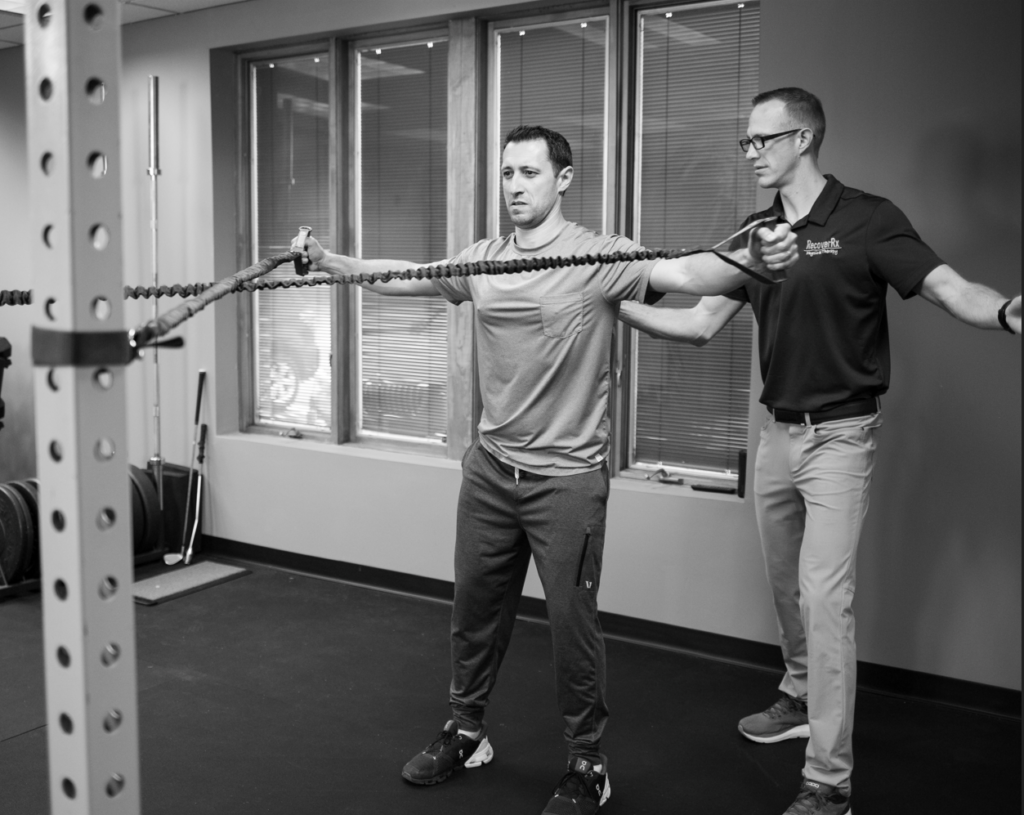
- Load the tissue to improve strength, power, and endurance to ensure that the tissues are prepared for all desired demands without being fearful of reinjury.
Elbow Specific Treatments
- Decrease tissue inflammation through bracing, taping, and massage
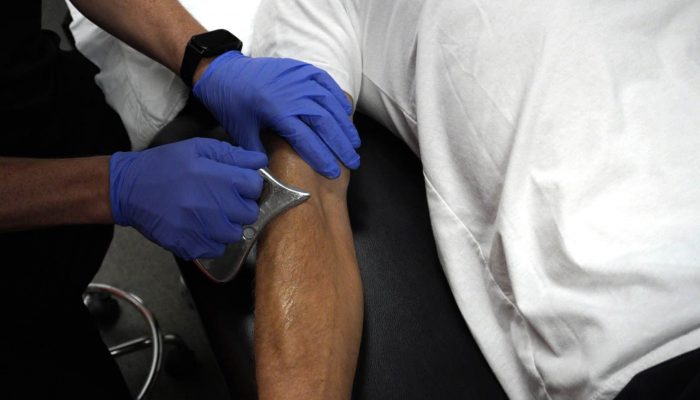
- Improve tissue mobility through massage, instrument assisted mobilization, cupping, & dry needling
- Decrease nerve sensitivity (numbness, tingling, pain that extends down the arm) through specific nerve exercises
- Progress plyometric and functional activities (throwing, catching, pushing, pulling, pressing)
- Break the cycle of inflammation with shockwave therapy
Important Things to Understand
- Tissues Heal. The body is designed to repair itself, but sometimes our system gets stuck in the inflammatory phase of tissue repair and needs a little help to move onto the recovery phase
- The true source of pain is often poorly correlated with x-ray and MRI imaging results. It is possible to have tissue damage on imaging that causes no pain or functional limitations. And it is possible to have pain with no visible findings on imaging – usually a result of nervous tissue over sensitivity.
- Soreness after exercise is not the goal, but it is also not always a sign of concern. True strength gains require an overload to the system which causes micro-damage. As that tissue recovers, it does so thicker and stronger than before. Soreness should be used as a way to monitor if the tissue is ready to take on more load, should stay at the current level, or should back down training intensity until the tissue is more prepared.
- Return to previous/desired activities is almost always possible through good education, proper mechanics, and progressive tissue loading.