
CALL US TODAY

331-253-2426

Knee Pain Physical Therapy in Naperville, IL

Start moving again without the constant ache in your knee

What we do for active adults in as little as one session with Knee Pain Physical Therapy

Knee pain physical therapy in Naperville, IL helps you move with less pain and more confidence during daily activities, workouts, and sports. Our one-on-one treatment approach focuses on improving strength, stability, and long-term knee function.

  • Walk, squat, and climb stairs without wincing or bracing for pain
  • Feel steady and strong on your feet whether you’re lifting, running, or chasing kids
  • Leave with a clear plan to keep your knees healthy and pain-free
BCF2F5C1-ECB8-4AB4-A958-B563A74090D8
5-star
"I am a distance running and I recently experienced an episode of knee pain. I went to RecoverRx Physical Therapy to address this pain and return to running. I worked with Dr. Sarah, and she was incredible! As a fellow PT (but neuro), I really appreciated the evidence based approach, an exceptional knowledge and application of pain science, a pro-movement mindset (no fear-mongering), and a combination of manual therapy and progressive tissue loading. Dr. Sarah was thorough with her evaluation and was able to identify structural and functional impairments and address them with a variety of home exercises - huge bonus that the HEP platform was easy to use."

Is pain in your knee making it hard to lift weights, run, jump, squat, climb stairs, get up from a low seat, sleep, or perform your normal work or home duties?

Does this sound like you?

We are here to help you find long term solutions!

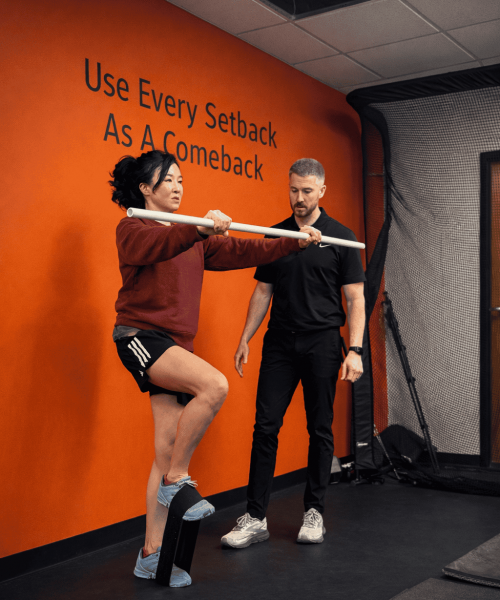
A physical therapist specializing in pelvic health assists a woman lifting a kettlebell in a gym with the motivational phrase "use every setback as a comeback" on the wall.

Typical Knee Conditions we Treat:

  • Arthritis
  • Patellofemoral Pain Syndrome
  • ACL Sprains and Repairs
  • Meniscus Tears
  • Quadricep Strains
  • Pre/Post-Op Total Knee Replacement

Common Causes

  1. Impaired Mechanics: stiffness in the joint or decreased flexibility in the muscles leads to decreased range of motion; weakness and muscle imbalance, impaired posture
  2. Injury: sudden impact or load to the tissue
  3. Chronic compensations: a previous injury or fear of future injury can lead to avoidance of activity in certain muscle groups while simultaneously causing overuse of other tissues.

RecoverRx Performance Physical Therapy Approach

  1. Break the pain cycle through education, manual therapy, and increasing tissue mobility
  2. Improve the mechanics of the joints, muscles, and nerves in the area during daily functional tasks and exercise/sport specific activities
  3. Load the tissue to improve strength, power, and endurance to ensure that the tissues are prepared for all desired demands without being fearful of reinjury.

Knee Specific Treatments

  • Decrease tissue inflammation through bracing, taping, and massage
  • Improve tissue mobility through massage, instrument assisted mobilization, cupping, & dry needling
  • Improve strength of the gluteal, hip rotator, and calf muscle groups which provides stability for the knee
  • Restore muscle balance between the quadriceps and hamstrings
  • Increase core control and alignment of the knee in relation to the hips and ankles
  • Improve joint nutrition and restore full range of motion
  • Optimize balance and single limb control
  • Progress plyometric and functional activities (jumping, running, cutting, squatting, climbing)
  • Progress aerobic/endurance conditioning
  • Break the cycle of inflammation with shockwave therapy

Important Things to Understand

  1. Tissues Heal. The body is designed to repair itself, but sometimes our system gets stuck in the inflammatory phase of tissue repair and needs a little help to move onto the recovery phase
  2. The true source of pain is often poorly correlated with x-ray and MRI imaging results. It is possible to have tissue damage on imaging that causes no pain or functional limitations. And it is possible to have pain with no visible findings on imaging – usually a result of nervous tissue over sensitivity.
  3. Soreness after exercise is not the goal, but it is also not always a sign of concern. True strength gains require an overload to the system which causes micro-damage. As that tissue recovers, it does so thicker and stronger than before. Soreness should be used as a way to monitor if the tissue is ready to take on more load, should stay at the current level, or should back down training intensity until the tissue is more prepared.
  4. Return to previous/desired activities is almost always possible through good education, proper mechanics, and progressive tissue loading.