
If pain along the outside of your ankle keeps flaring up every time you run, cut, or push off, there is a good chance peroneal tendonitis is involved. It can start as a mild annoyance, then slowly turn into the thing that makes you second guess every step.
As a sports physical therapist, I see this pattern all the time in active adults and athletes who play through pain until it finally forces a pause. You might feel sharp or burning discomfort along the outside of your ankle or foot, stiffness when you get out of bed, or a nagging ache after longer walks or runs.
It often gets brushed off as just an ankle tweak or a lingering sprain, so you rest a bit, maybe ice it, then jump right back into full training. The problem is that the pain keeps coming back because the real cause never gets addressed.
This article breaks down what peroneal tendonitis actually is, why it shows up in active people, and how targeted sports physical therapy helps you stay as active as possible while you heal. The goal is to give you clear, practical information so you can understand your ankle, protect your performance, and feel more confident in every step.
Understanding Peroneal Tendonitis And Why It Happens
Peroneal Tendons: What They Are And Why They Matter
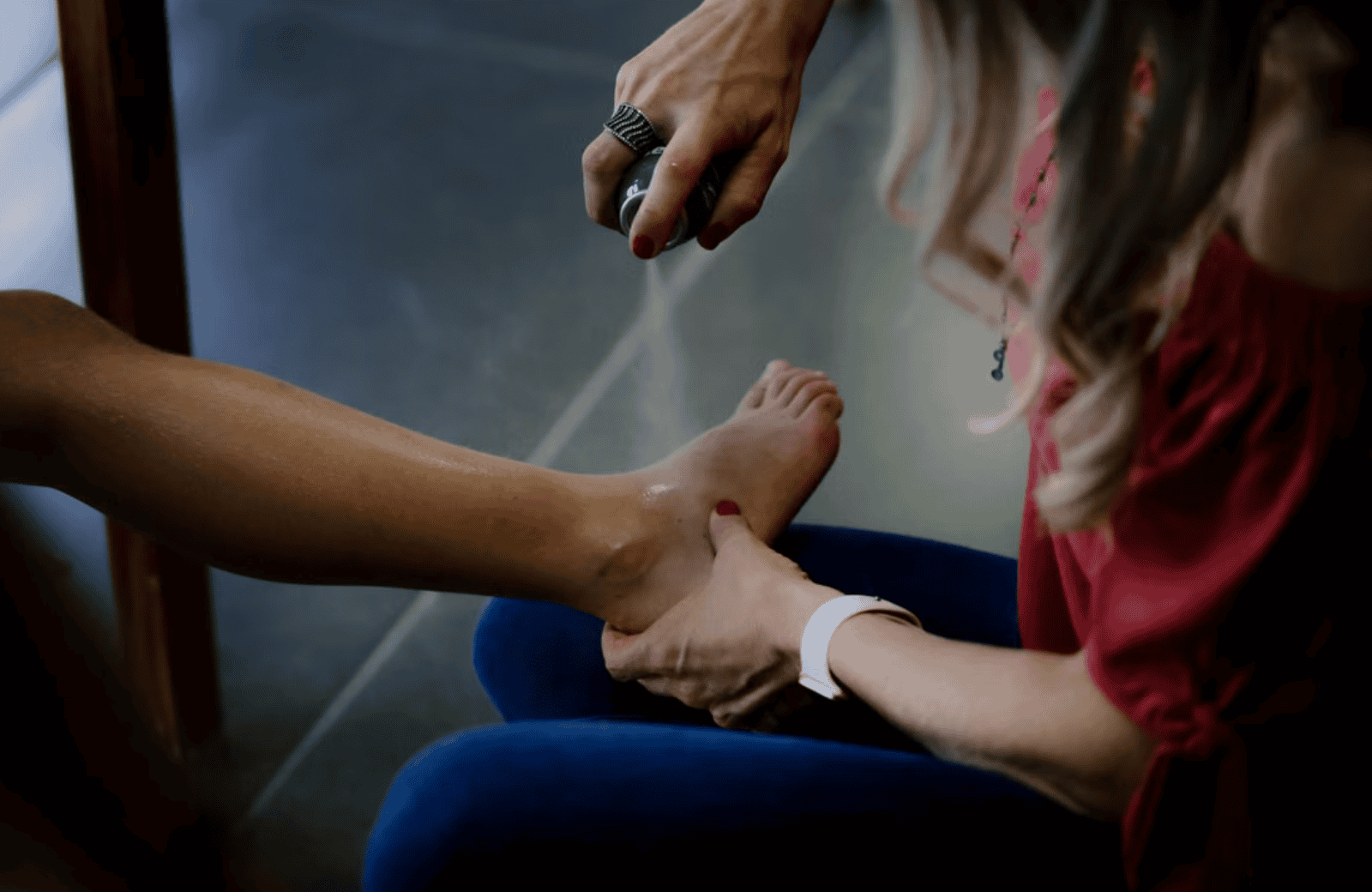
Peroneal tendonitis starts with two key players on the outside of your lower leg. These are the peroneus longus tendon and the peroneus brevis tendon.
They run from the muscles along the outer shin, wrap behind the bony bump on the outside of your ankle, then attach into your foot. Their main jobs are to:
- Help you push off the ground
- Control side to side motion at the ankle
- Stabilize your foot on uneven surfaces
- Protect your ankle from rolling outward
When you run, cut, jump, or even walk briskly, these tendons work hard with every step. If they do not keep up with the loads you put on them, they start to complain.
For active adults and athletes, these tendons act like your built in ankle seatbelt. When they get irritated, you feel it quickly in your sport, your workouts, and even in daily life.
Common Causes In Active Adults And Athletes
Peroneal tendonitis almost never appears out of nowhere. There is usually a mix of training load, movement patterns, and sometimes past injuries that stack up over time.
Some of the most common triggers include:
- Sudden spikes in training volume or intensity
- Jumping mileage too fast
- Adding hills or speed work all at once
- Back to back games, practices, or tournaments without recovery
- Overuse on tired or unprepared tissues
- Long runs on fatigued legs
- High repetition plyometrics when the ankle is not ready
- Extra workouts piled onto an already busy schedule
- Biomechanical factors
- Flat feet that roll inward and stress the outer ankle
- Very high arches that do not absorb shock well
- A history of ankle sprains that left you with instability
- General hypermobility that lets joints move more than they should
- Footwear and surfaces
- Worn out running shoes or cleats
- Shoes that do not match your foot or sport demands
- Hard or uneven training surfaces like old turf, concrete, or rutted trails
- Sport specific demands
- Runners and triathletes who log a lot of miles, especially on cambered roads or trails
- Soccer, basketball, volleyball, and tennis players with constant cutting and jumping
- Lifters and CrossFit athletes who spend time on single leg work or heavy Olympic lifts
Peroneal tendonitis often shows up at the exact point where your training exceeds your current capacity. It is not a sign that your body is weak, it is a sign that your tissues need a smarter plan and better support.
Signs And Symptoms Of Peroneal Tendonitis
Peroneal tendonitis has a pretty distinct feel once you know what to look for. The pain usually lives along the outer ankle and may travel down toward the outside of the foot.
You might notice:
- Tenderness if you press along the outside of your ankle
- A dull ache that appears during or after runs or long walks
- Sharper pain with cutting, quick direction changes, or pushing off the outside of the foot
- Stiffness or tightness around the outer ankle in the morning or after sitting
- Discomfort when you walk on uneven ground, grass, trails, or sloped roads
Peroneal tendonitis often feels different from other common issues. A classic lateral ankle sprain usually involves a specific twisting event and often brings quick swelling and bruising. Shin splints tend to hurt along the inner or front edge of the shin, while calf strains feel more in the muscle belly than around the tendon.
Achilles problems usually sit at the back of the heel or lower calf. Plantar fascia pain tends to show up on the bottom of the heel or arch, not along the outside of the ankle.
If you feel locking, a big pop, severe swelling, or you cannot put weight on the foot, you need an in person assessment quickly. For most active adults though, peroneal tendonitis starts as a nagging, stubborn pain that slowly chips away at your confidence and performance.
Acute Flare Ups Versus Chronic, Lingering Pain
Peroneal tendonitis can show up fast or build slowly over time. An acute flare might follow a twist, a new hill workout, or a tough weekend tournament.
In that case you might feel:
- Sudden pain along the outside of the ankle
- Swelling or warmth around the area
- Pain with walking, especially on uneven surfaces
- A clear before and after where you know exactly when it started
Chronic peroneal pain looks different. It often:
- Starts as a low level ache that you ignore
- Shows up only with higher loads at first, like speed work or cutting
- Gradually becomes more constant after shorter efforts
- Lingers for weeks or months despite rest, ice, or braces
If you have hypermobility or a long history of ankle sprains, the tendons often work overtime to stabilize your ankle. That constant workload can drive chronic irritation.
Rest alone rarely solves chronic peroneal tendonitis. It may feel better when you stop, but as soon as you ramp up again, the pain returns because the underlying issues remain.
Sports PT Strategies To Treat Peroneal Tendonitis And Keep You Moving
Step 1: A Clear, Movement Based Assessment
The first step is not a quick glance at your ankle and a sheet of generic exercises. You need a full picture of how you move, load, and live.
In a thorough sports physical therapy assessment for peroneal tendonitis, you can expect:
- A detailed history
- Training volume, frequency, and intensity
- Surface changes, shoe changes, or recent competition spikes
- Previous ankle sprains, fractures, or surgeries
- A movement and gait analysis
- How your foot hits the ground when you walk or run
- How your knee and hip line up over your foot
- How your trunk and pelvis move when you load a single leg
- Strength and control testing
- Ankle strength in multiple directions, not just up and down
- Hip and glute strength that supports the entire leg
- Single leg balance and stability in static and dynamic tasks
- Mobility checks
- Ankle dorsiflexion and plantarflexion range
- Midfoot and rearfoot motion
- Hip mobility that may affect how your foot lands
This kind of assessment helps you understand the reason behind the pain. It creates a clear map of the true problem, not just a label on the sore spot.
Step 2: Calming Pain Without Completely Stopping Your Life
When your ankle hurts, you do not always have to shut everything down. The goal is to calm symptoms while keeping you as active as possible.
In the early phase, treatment usually focuses on:
- Relative rest, not total rest
- Reducing or pausing the movements that spike your pain
- Keeping in some form of activity that feels safe and controlled
- Activity modifications
- Swapping impact cardio for biking, pool running, or rowing
- Adjusting gym work to emphasize pain free patterns
- Limiting cutting, jumping, or long downhill runs for a short window
- Symptom management
- Short bouts of ice if it feels helpful
- Compression sleeves or socks when appropriate
- Elevation after long days on your feet
- Smart load exposure
- Doing small amounts of tendon loading that stay under your pain threshold
- Learning which movements are irritating versus which are therapeutic
The goal here is to create a calm environment so the tendon can respond to targeted exercise. You do not have to feel like an injured person who just sits on the sidelines.
Step 3: Restoring Mobility And Foot Ankle Control
Once pain settles a bit, the next step is to clean up mobility and control around the ankle and foot. Stiff joints and lazy foot muscles can both feed peroneal tendon overload.
For mobility, simple drills can help, such as:
- Ankle rocks toward a wall to improve dorsiflexion
- Gentle calf stretching in different knee positions
- Foot and ankle circles that explore pain free ranges
For control, focused exercises often include:
- Toe spreading and foot intrinsic drills
- Short foot holds to engage the arch
- Slow, controlled ankle movements with light bands
This phase is not about cranking on a tight area. It is about teaching your foot and ankle to move smoothly and share load evenly so strength work has a solid foundation.
Step 4: Building Peroneal Strength And Tendon Capacity

Peroneal tendonitis does not resolve fully until the tendon can tolerate the loads you want to put through it. Progressive strengthening is essential if you want durable results.
A program often starts with low load, controlled exercises such as:
- Band resisted ankle eversion while seated
- Side lying eversion lifts with a slow lowering phase
- Double leg heel raises that gently bias the outer part of the foot
As tolerance improves, the plan progresses to:
- Single leg heel raises with steady tempo
- Standing band walks and monster walks to challenge lateral stability
- Loaded calf raises with a slight shift toward the lateral foot, if tolerated
For tendon health, the details matter. Slower tempo, controlled range, and consistent repetition build capacity much better than quick, sloppy reps.
The tendon needs to learn that it can handle force again. That confidence at the tissue level turns into confidence in your movement and sport.
Step 5: Single Leg Stability And Balance Training
Your peroneal tendons fire hardest when your body challenges balance and reacts to surprise. If you only train them in straight lines, they stay unprepared for game speed and trail chaos.
Single leg stability work often starts with:
- Static single leg stance on flat ground
- Single leg stance with head turns or arm reaches
- Eyes closed balance drills
- Single leg stance on foam pads or other unstable surfaces
Then the plan moves toward more dynamic work, including:
- Single leg Romanian deadlifts
- Single leg calf raises off a step
- Small forward and side hops, then diagonal hops
- Multi directional hops with controlled landings
This kind of training not only protects the peroneal tendons. It also reduces your risk of future ankle sprains and boosts your overall athletic control.
Step 6: Returning To Running, Sport, And Higher Level Training

A smart return to sport plan uses clear criteria instead of a random number of days or weeks. Each step is earned by showing that your ankle and tendon can handle the demands placed on them.
For runners, that might look like:
- Pain free walking and hopping in place
- Short walk jog intervals on flat, predictable surfaces
- Gradual mileage build with rest days included
- Adding hills, speed work, and longer efforts after easy runs feel solid
For field and court athletes, the path often includes:
- Linear jogging and acceleration drills
- Lateral shuffles and gentle cutting at low speed
- Higher speed cuts, pivots, and deceleration drills
- Sport specific drills that mimic your position demands
For lifters and CrossFit athletes, return usually involves:
- Rebuilding load tolerance in double leg lifts first
- Reintroducing single leg loading and overhead work with strict control
- Adding plyometrics and dynamic lifting once your ankle shows strength and confidence
The key theme is progression. Demand returns in layers that your tendon can handle, so you do not bounce between overdoing it and total rest.
Special Considerations: Hypermobility, Chronic Pain, And Postpartum Athletes
Peroneal tendonitis in a hypermobile or chronic pain body can feel different. Joints may move more, and the nervous system may stay on higher alert.
For hypermobile athletes, treatment often emphasizes:
- Strength and control more than aggressive stretching
- End range control so joints stay safe at their extremes
- Slower progressions that build deep stability around the ankle and hip
For those with chronic pain, the plan may need more patience and flexibility. Symptoms can flare with stress, sleep changes, or life load, so graded exposure becomes very important.
Postpartum athletes often face unique foot and ankle changes. Hormones, weight shifts, and time away from impact activity all affect tendon load tolerance.
For postpartum runners and lifters with peroneal tendonitis, a smart plan might:
- Rebuild core and hip strength alongside ankle work
- Progress impact carefully and track how symptoms respond
- Consider changes in footwear or support as the body adapts back to sport
In all of these situations, a cookie cutter plan falls short. Your history, your sport, and your body deserve an approach that aims not just for pain relief, but for confident, durable performance.
How Sports PT Helps You Move With Confidence Again
Beyond Pain Relief: Addressing The Root Cause
Peroneal tendonitis is rarely just an ankle problem. It usually reflects how your whole system handles load, from your hips and core down to your foot.
At RecoverRx Physical Therapy, we look past the sore spot and focus on why that tendon works overtime in the first place. That root cause approach helps you build real, lasting change instead of chasing short term relief.
Building Strength, Resilience, And Trust In Your Body
Living with ankle pain can quietly drain your confidence. You may start to avoid hills, cut a little softer, or question every landing.
With a targeted sports physical therapy plan, it is possible to retrain strength, balance, and control so your ankle feels solid again. Over time, the goal is not just less pain, but more trust in every step, stride, and jump.
Support For Complex, Active Bodies
If you deal with chronic pain, hypermobility, or a long history of ankle sprains, you are not too complicated. You simply need a plan that respects how your body responds.
RecoverRx Physical Therapy in the Chicago western suburbs builds care around your specific needs and activities. That includes active adults, competitive athletes, postpartum athletes, and anyone who wants to move well for the long term.
Ready To Take The Next Step
If you recognize the signs of peroneal tendonitis and you live in Oakbrook Terrace, Westmont, Naperville, or nearby suburbs, you do not have to figure this out alone. RecoverRx Physical Therapy is here to help you understand your ankle, protect your performance, and feel strong and steady in motion.
You can start with a free 15 minute discovery call with our team to talk through your symptoms, your sport, and your goals. Call 331 253 2426 to schedule your call and take a clear, confident step toward better movement.