
Prolapse
Are you ready to feel supported while taking control of your prolapse recovery journey?
Support Your Body Through Prolapse So You Can Stay Strong and Keep Doing What You Love.
- Lift, exercise, and stay active with prolapse without fear of worsening symptoms
- Move through daily life without bracing, guarding, or protecting against heaviness or pressure
- Feel strong, & confident in your body again


Alice
"Dr. Megan is wonderful. I had so many doubts about my bladder prolapse as many friends told me the exercises won't work. She calmed me down and talked me through things. It worked! I've improved so much I no longer worry that I'll need surgery!"
Dealing with heaviness, pressure, or a “bulging” sensation that just won’t seem to go away? Having trouble rebuilding strength or returning to exercise without worsening prolapse symptoms? Noticing increased pressure, instability, or discomfort during daily activities?
Does this sound like you?
- Feeling disconnected from your core after giving birth?
- Pain with intimacy?
- Unable to fully empty your bowels?
- Experiencing heaviness, pressure or fullness in your pelvis?
Typical Conditions we Treat:
- Birth prep
- Postpartum & return to exercise
- Discomfort during sexual intercourse
- Lower back pain
- Pre/postnatal care
- Prolapse
- Bowel, bladder, or breathing retraining
- Diastasis Recti (abdominal separation)
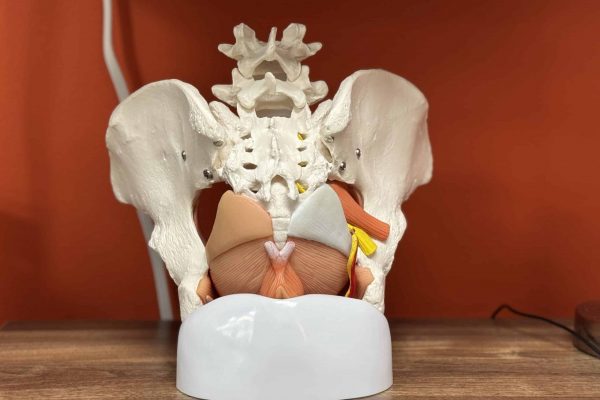
We are here to help you find long term solutions! It doesn't matter your age, and it's never too late!
*Women’s Health Services are only offered at our Oakbrook Terrace location*
RecoverRx Performance Physical Therapy Approach
- We’ll take you through a comprehensive external assessment of your mobility, strength, and functional movement patterns. This will allow us to identify underlying issues and come up with a treatment plan to get you back to full speed and strength. (No doctor’s order necessary).
- We offer an individualized treatment program tailored to your specific needs. Our quality 1-on-1 care and attention will provide you with manual techniques to improve tissue mobility and decrease pain, and education on strategies to coordinate healthy bladder, bowel, and pelvic habits with your daily activities.
- With an activity specific strength training program, we’ll get you back on track to return to the activities and sports you love. And we will advance your strength, mobility and performance training so you can really own it and feel confident in doing what you want to do. All while teaching you how to prevent that issue from happening again.
Prolapse Specific Treatments
- Improve alignment and movement patterns to reduce strain on your body during pregnancy and postpartum recovery
- Use targeted exercises to calm overworked muscles and rebuild strength where you need it most after baby
- Restore mobility in your spine, hips, and pelvis to support a smoother, more comfortable pregnancy and recovery
- Improve strength, endurance, and coordination so your body feels stable carrying, lifting, and caring for your baby
- Retrain deep core and stabilizing muscles to properly support you through motherhood’s daily demands
- Improve soft tissue mobility to decrease tension and lingering postpartum discomfort
- Calm nerve sensitivity contributing to pregnancy-related pain, pressure, or muscle guarding
- Progress functional activities (walking, lifting, exercise, impact) safely during pregnancy and after delivery
- Support and manage pelvic organ prolapse with targeted strength and pressure-control strategies so you can move with confidence and reduce heaviness
- Address diastasis recti with progressive core retraining to restore tension, stability, and functional strength through your abdominal wall
Important Things To Understand
- Tissues Heal. The body is designed to repair itself, but sometimes our system gets stuck in the inflammatory phase of tissue repair and needs a little help to move onto the recovery phase
- The true source of pain is often poorly correlated with x-ray and MRI imaging results. It is possible to have tissue damage on imaging that causes no pain or functional limitations. And it is possible to have pain with no visible findings on imaging – usually a result of nervous tissue over sensitivity.
- Soreness after exercise is not the goal, but it is also not always a sign of concern. True strength gains require an overload to the system which causes micro-damage. As that tissue recovers, it does so thicker and stronger than before. Soreness should be used as a way to monitor if the tissue is ready to take on more load, should stay at the current level, or should back down training intensity until the tissue is more prepared.
- Return to previous/desired activities is almost always possible through good education, proper mechanics, and progressive tissue loading.
Check Out Dr. Megan's E-book ,
"A Guide to Return to Lifting Postpartum"
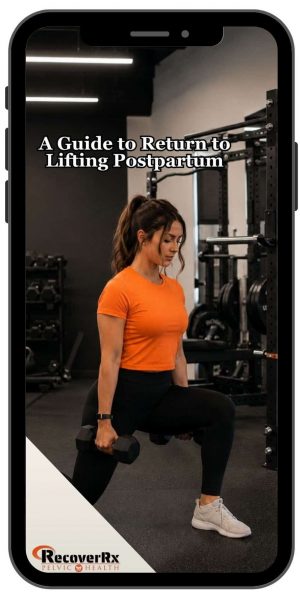
Get Started Today!
Want To Get Relief Faster?
Choose which option works best for you
