Sex after birth can feel very different from what you expect. Many people are told they are “cleared” for intimacy, then discover that penetration hurts, their body tenses up, or everything feels unfamiliar and uncomfortable. Pelvic floor therapy for painful sex can sound medical or intimidating, but for many postpartum parents, it is simply the missing piece no one explained.
If this feels familiar, you are not alone, and you are not broken. Painful sex after birth is common, whether you had a vaginal delivery or a Cesarean, but it is not something you must accept or just push through.
At RecoverRx Physical Therapy, postpartum bodies are seen as strong, adaptable, and worthy of real attention, not quick fixes. When pelvic floor therapy is part of recovery, the focus is on helping you move, breathe, and reconnect with your body so intimacy feels safe and comfortable, not something you dread.
This article walks through why sex can hurt after birth, how your pelvic floor is involved, and what gentle, evidence-based therapy can do to support healing. The goal is to give you clear, practical information so you feel more informed, less alone, and more confident taking the next step that feels right for you.
Understanding Postpartum Painful Sex
What Counts As Painful Sex After Birth
Painful sex after birth can show up in many different ways, and all of them matter. You might notice physical sensations such as:
- Burning or stinging at the vaginal opening when penetration starts
- Sharp or stabbing pain with deeper thrusting
- A feeling of pressure or “hitting a wall”
- Cramping in your pelvis or low belly during or after sex
- Pulling or soreness around a Cesarean or perineal scar
For some people, pain appears every time they attempt sex. For others, it comes and goes, or only appears in certain positions, on certain days, or when fatigue and stress are high.
You might also feel:
- Vaginal dryness that makes friction feel rough
- Itching or rawness afterward
- A sense that your whole body tenses up as soon as you think about penetration
Avoiding intimacy, bracing as soon as a partner gets close, or feeling dread instead of anticipation are also part of the experience. Sex is not only physical contact, but it also involves emotional and mental comfort, so any pain in these areas matters.
Why Sex Can Hurt After Vaginal Birth Or Cesarean
Pregnancy, birth, and the postpartum period place major demands on your body. Even if your delivery is described as uncomplicated, your tissues, muscles, joints, and nervous system go through significant change.
After a vaginal birth, you might have:
- Tearing, an episiotomy, or stitches
- Scar tissue that feels tight, thick, or stuck
- Pelvic floor muscles that grip and guard to protect healing tissue
- Tailbone pain after a long pushing phase or a baby position that stressed the coccyx
After a Cesarean, the challenges often look different but are just as real. You might notice a scar that feels tight or numb, core weakness that makes you overuse your pelvic floor or hips, and a feeling of disconnect from your lower abdomen and pelvis.
Hormones also play a large role. Breastfeeding and the postpartum hormonal shift can lower estrogen, which often leads to vaginal dryness and more sensitive tissue at the vulva and inside the vagina.
Life stress adds another layer. Less sleep, more responsibility, and fewer chances to move in ways that feel good can increase body tension and reduce your capacity to relax, and your pelvic floor responds directly to that load.
The Pelvic Floor’s Role In Postpartum Pain

The pelvic floor is a group of muscles and connective tissues that sit like a supportive hammock between your pubic bone and tailbone. These muscles help support your bladder, uterus, and rectum, and they play a key role in sexual function, bowel and bladder control, and core stability.
Many people hear “pelvic floor” and think only of weakness and Kegels. In reality, a pelvic floor can be too weak, too tight, or a combination of both in different areas.
Painful sex often involves a pelvic floor that works too hard. The muscles may grip to protect healing tissue, respond to fear, or compensate for core changes after pregnancy, and that constant tension can cause pain.
When those muscles stay tight, they can:
- Make penetration feel like hitting a barrier
- Cause burning at the opening as tissue stretches
- Create a deep ache that lingers after sex or shows up the next day
Daily habits also feed into this pattern. If you hold your breath to lift your baby, suck in your belly all day, or clench your glutes when you stand, your pelvic floor often tightens along with everything else.
Red Flags That Mean It Is Time To Talk To A Provider
Some brief discomfort the first time or two after birth can happen, especially if you had tearing or a Cesarean incision. Ongoing or intense pain, however, deserves real attention and care.
Reach out to a pelvic floor therapist or medical provider if you notice:
- Pain that does not improve after several attempts at sex
- Sharp, tearing, or burning pain that makes you stop immediately
- Bleeding that worries you
- Pelvic pressure, heaviness, or a “bulge” feeling inside the vagina
- Leaking urine when you laugh, cough, sneeze, jump, or run
- Constipation or pain with bowel movements, along with painful sex
It is also important to seek help if sex triggers panic, flashbacks, or overwhelming stress. Emotional safety is just as important as physical comfort, especially in the postpartum period.
In general, your obstetric or gynecology provider can check healing, rule out infection, and assess hormone-related changes. A pelvic floor physical therapist can evaluate muscles, movement, scars, and posture, and a mental health or sex therapist can support you with trauma, anxiety, or relationship stress.
You do not need to wait a specific number of months to “qualify” for help. If pain changes how you move, how you connect with others, or how you feel about your body, it is worth addressing.
How Pelvic Floor Therapy Helps With Painful Sex Postpartum
What A Postpartum Pelvic Floor Assessment Looks Like
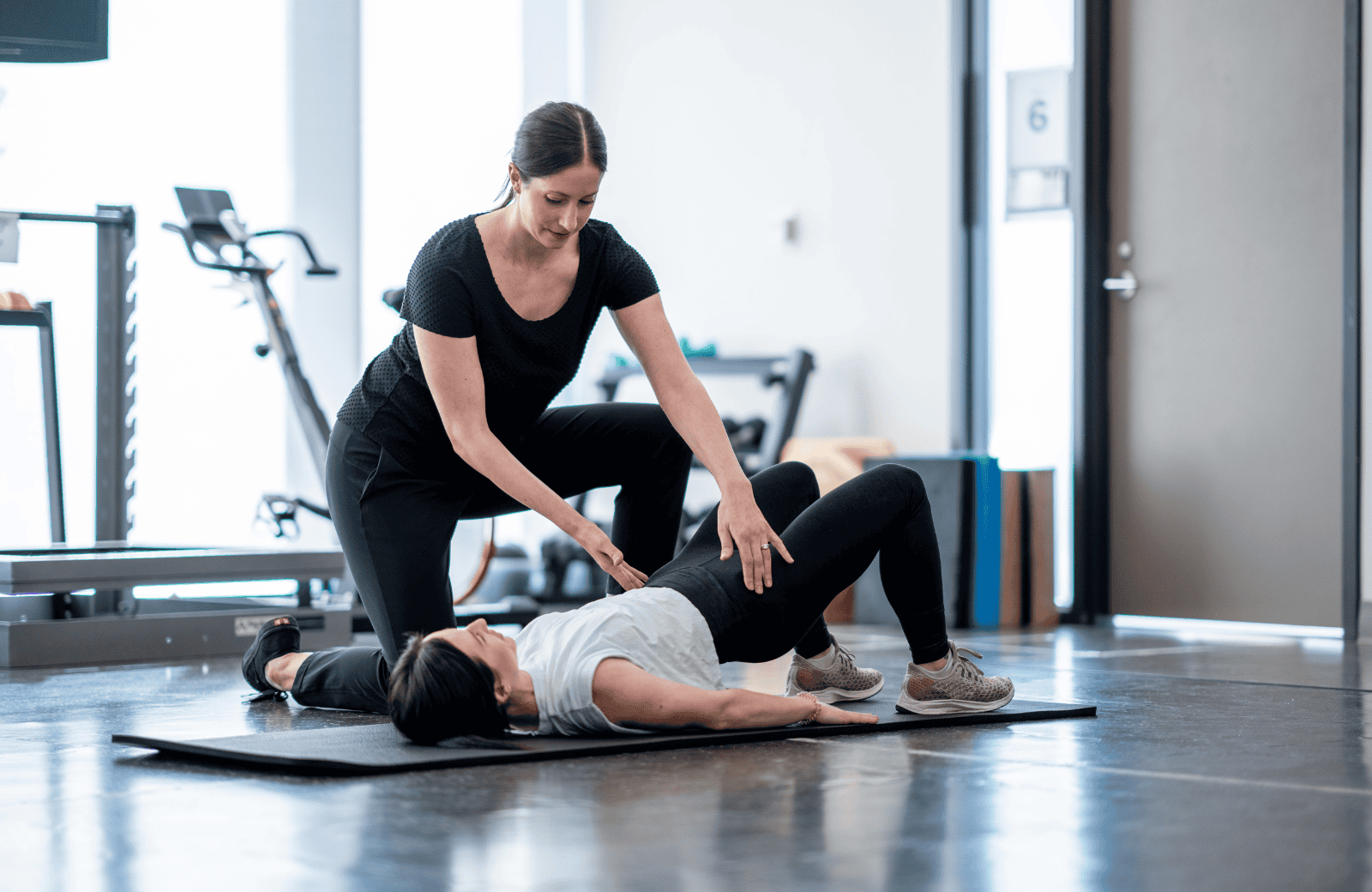
A pelvic floor assessment should feel collaborative, respectful, and paced in a way that feels safe. You remain in control of what happens during every part of the visit, and consent is ongoing.
A typical first session at a clinic like RecoverRx includes:
- A conversation about your birth story, current symptoms, and goals
- Questions about bladder habits, bowel habits, and daily movement
- A look at how you stand, walk, squat, and lift to see how your body compensates
- Testing of breathing and core coordination to see how pressure moves through your trunk
With your clear permission, your therapist might suggest an internal exam to better understand your pelvic floor. This step is optional; you can decline at any time, and you can stop the exam whenever you want.
An internal exam helps your therapist:
- Check muscle tone, strength, and endurance
- Find tender points or trigger points that recreate your pain
- Feel scar tissue and how it moves
- See how your pelvic floor responds to breathing and gentle bearing down
You stay as covered as possible, and each step is explained before it happens. You can ask for breaks, changes, or a complete stop, and your comfort is central to the process.
Most importantly, your personal goals guide the plan. If you want to enjoy pain-free sex, feel steady lifting your child, or simply stop worrying about your pelvic area, your treatment plan reflects those priorities.
Hands-On Treatment For Pelvic Pain And Scar Sensitivity
Pelvic floor therapy often includes gentle, hands-on techniques to help your tissues move better and your nervous system feel safer. The goal is not to cause more pain, but to gradually reduce tension and improve comfort.
Treatment may involve:
- Soft tissue release to tight pelvic floor muscles using external and sometimes internal techniques
- Gentle stretching and mobilization around the hips, low back, and abdomen
- Scar work for Cesarean or perineal scars to reduce pulling and sensitivity
- Desensitization techniques around tender areas to help your system calm down
Many people start with a very light touch away from the most painful areas. As your body and nervous system adjust, tolerance and comfort usually improve, and your therapist can progress to more direct work.
For scars, a therapist can show you how to:
- Move the skin and tissue around your scar so it glides and bends more easily
- Use different directions and pressures without irritating the area
- Progress slowly so the region feels less tight and more like a normal part of your body
By improving tissue mobility and decreasing muscle guarding, penetration often feels less sharp and intense. As your body learns that touch does not always lead to pain, you may notice less bracing and fear before intimacy.
Breathing, Core, And Posture As Missing Pieces

Your breath and pelvic floor work closely together as part of your core system. When you inhale, the diaphragm drops, your ribs expand, and your pelvic floor should lengthen and soften, then gently lift again as you exhale.
If you constantly grip your abs, hold your breath to lift, or clench your jaw when stressed, that natural movement can get stuck. Over time, your pelvic floor can stay more “on” than off, which feeds into pain and tension.
A pelvic floor therapist often teaches you how to:
- Use diaphragmatic breathing that encourages pelvic floor relaxation
- Coordinate your exhale with lifting or effort to protect your core and pelvis
- Find positions that support your ribs and pelvis so muscles can work without constant gripping
Core and hip strength also play a huge role. When your deep core and hips support you well, your pelvic floor does not need to act like a backup system all the time.
This part of treatment might include:
- Gentle postpartum core exercises that improve control without bearing down
- Hip strength and mobility work for your glutes and deep hip muscles
- Postural adjustments for feeding, stroller pushing, and carrying your baby
Small changes to how you move during daily life can add up over time. Your pelvic floor then gets more chances to relax and recover, which is essential for reducing pain.
Graded Return To Intimacy At Your Pace
Returning to sex after birth does not need to be an all-or-nothing event. You can move through stages that respect your body, your emotions, and your relationship needs.
A graded plan might include steps like:
- Starting with nonsexual touch and cuddling to rebuild safety and connection
- Exploring external touch around the pelvis only when you feel ready
- Using a single finger or a small dilator with lubricant to practice comfortable insertion
- Gradually increasing size, depth, or duration only when your body says this feels okay
Your pelvic floor therapist can suggest positions that often feel better early in recovery, such as side lying with a pillow between your knees or positions where you control depth and angle. Slower movement and more control can significantly reduce pain.
You can bring this plan into your relationship by setting clear signals for pause or stop, agreeing that pain is information rather than something to push through, and focusing on comfort and connection rather than performance. This step-by-step approach helps you rebuild trust in your body and in intimacy.
Addressing The Emotional Side Of Postpartum Pain
Painful sex after birth not only affects your tissues, but it also affects how you feel about your body, your identity, and your relationships. Many people experience grief for how things used to feel, anger that no one prepared them, or shame that they are not “over it” yet.
These feelings are valid and deserve space. Ignoring the emotional side often makes physical pain feel louder, because your nervous system stays in a more guarded state.
A pelvic floor therapist can support you by listening to your story, explaining what is happening in your body in clear terms, and helping you set realistic expectations and milestones. You can also receive guidance on how to start honest conversations with your partner about what feels good, what does not, and what you need right now.
Sometimes, a difficult birth, prior medical experiences, or past trauma sit just under the surface of your pain. In those cases, working with a mental health or sex therapist alongside physical therapy can be very powerful.
You might work on processing fear around penetration or exams, rebuilding a sense of safety in your own body, and discovering new ways to experience closeness that are not centered on penetration. Recovery is not just the absence of pain; it is the return of trust, comfort, and connection.
What Recovery Can Look Like With One-to-One Pelvic Floor Therapy
Realistic Timelines And Progress Markers
Every postpartum body follows its own path, so there is no universal timeline for pain-free sex. With consistent pelvic floor work, many people notice small but meaningful changes within a few weeks.
Early progress markers might include less burning with initial penetration, less fear or bracing when you think about intimacy, and better awareness of how to relax your pelvic floor on purpose. You might also feel more comfortable with touch around your scar or vaginal opening.
Over time, improvements often look like longer periods of intimacy without pain, the ability to try more positions without symptoms, and less lingering soreness afterward. You may notice that intimacy feels less like a medical test and more like a connection again.
For many postpartum people, “pain-free sex” is a realistic and valid goal. Even if some mild sensitivity remains, you can still move toward a level of comfort and confidence that feels satisfying and workable in your real life.
Building Long-Term Pelvic Health Instead Of Quick Fixes
Pelvic floor therapy is about more than getting through one encounter without pain. It lays a foundation for long-term pelvic health that supports the rest of your life.
With the right guidance, you can reduce your risk of ongoing pelvic pain, address leaking or urgency if those show up with exercise or daily life, and support your pelvic organs to reduce symptoms of prolapse. You also build strength that helps you lift, carry, and move with more confidence as your child grows.
For many people, this work becomes part of a larger plan to feel strong and capable in a postpartum body. You gain skills and awareness that you can revisit through future pregnancies, surgeries, or major life changes.
Periodic check-ins with a pelvic floor therapist can help you adjust exercises as your activity level or goals change, catch small issues before they grow, and stay connected to how your body feels, not just how it looks. The goal is not perfection, but a body that feels capable, supported, and trustworthy as you move through your daily life and relationships.
Support For Postpartum Pelvic Pain In The Chicago Western Suburbs
Reclaiming Comfort, Intimacy, And Confidence
Painful sex after birth can make you feel isolated, frustrated, and unsure where to turn. It is important to know that pain is common, but it is not a life sentence, and you are allowed to ask for help.
At RecoverRx Physical Therapy, your whole body and whole story matter, not just one symptom. The focus is on root cause, movement-based care, so you build real confidence and long-lasting change, not just short-term relief.
Whether you are a few weeks postpartum or several years past your last birth, it still counts. It is always acceptable to decide that you are ready to heal now.
How RecoverRx Helps Postpartum Parents In Oakbrook Terrace, Westmont, And Naperville
We work one-on-one with you in a calm, low-volume setting so you never feel rushed or overlooked. Every session centers on your goals, whether that is pain-free sex, lifting your kids with ease, or feeling at home in your body again.
Our postpartum and pelvic health care can support you if you are dealing with:
- Painful sex or fear of penetration after birth
- Cesarean or perineal scar pain that pulls, burns, or feels strange
- Pelvic pressure or heaviness that makes you worry about prolapse
- Leaking urine when you laugh, cough, or exercise
- Core weakness or abdominal doming that affects how you move
We combine hands-on treatment, targeted exercise, and education so you understand what is happening and what you can do about it. The goal is to help you feel strong, informed, and in control of your recovery.
You Do Not Have To Just Live With It
Many postpartum people hear that pain with sex is “normal” and that it will eventually resolve. A more accurate message is that it is common, but you still deserve to feel better and to enjoy intimacy again.
You are not dramatic for wanting sex to feel comfortable and connected. You are not selfish for wanting time, space, and support for your own healing while you care for your family.
Pelvic floor therapy is not about bouncing back or meeting someone else’s timeline. It is about moving forward in a way that is kinder to your body and more aligned with the life you want.
Ready To Take The Next Step
If you live in the Chicago western suburbs and feel curious or hopeful about pelvic floor therapy, you can start with a small, low-pressure step. RecoverRx Physical Therapy offers a free 15-minute discovery call so you can share what is going on and learn how we may be able to help.
On this call, a member of our team listens to your story, answers your questions, and outlines what an individualized plan might look like for you. There is no obligation to commit; it is simply a chance to feel heard and to get clear, professional information.
To schedule your free discovery call or book an evaluation, you can call RecoverRx Physical Therapy at 331 253 2426. You are allowed to heal, you are allowed to feel good in your body again, and you do not have to go through this alone.