IT band syndrome is the most common cause of pain on the outside of the knee, and it usually comes from how you load your hip and knee, not from a tight band you need to stretch harder.
The iliotibial band is a thick strip of connective tissue that runs along the outside of your thigh, from your hip to just below your knee. When the tissue and the structures under it get irritated by repeated bending and straightening, you feel a sharp or burning pain in the outer knee, often at a predictable point in your run or ride. The good news is that this is one of the most fixable running injuries we treat, and you rarely have to stop training completely to recover.
Most people feel it creep in during longer runs, downhill sections, or after a jump in mileage. The pain tends to switch on at a certain distance, ease when you stop, then return faster the next time. That pattern is the tell.
Below we walk through what IT band syndrome actually is, what causes it, how to settle a flare quickly, the exercises that fix the root problem, and when it is time to get hands-on help.
What You Need to Know About IT Band Syndrome
- The hallmark sign is sharp or burning pain on the outside of the knee that gets worse the longer you run or cycle.
- The band itself is not the villain. Weak or poorly timed hip muscles usually drive the irritation.
- Foam rolling can ease symptoms short term, but it does not fix the cause on its own.
- Smart load management plus targeted hip and core strength is what creates lasting relief.
- Most runners keep training in some form while they recover, and a clear plan speeds the timeline.
We help runners, cyclists, and active adults in Oak Brook and the surrounding suburbs get back to full training without surgery, injections, or months on the couch. If your outer knee is flaring right now, call us at 331-253-2426 or request an appointment, and we will build a plan around your goals. Our running injury rehabilitation visits are one-on-one with a Doctor of Physical Therapy, so you get real answers on day one.
What Is IT Band Syndrome?
IT band syndrome is an overuse injury where the tissue on the outside of the knee becomes irritated and inflamed from repetitive motion. The iliotibial band glides as your knee bends and straightens, and when that movement happens thousands of times under poor control, the area near the outer knee gets aggravated. It is also called iliotibial band syndrome or ITBS.
For years, the standard explanation was that the band rubbed back and forth over a bony bump. Newer research points to a layer of fat and sensitive tissue underneath the band that gets compressed and irritated instead. Either way, the experience is the same for you. The outside of your knee hurts, and it hurts more the more you move.
Where Does the Pain Show Up?
The pain usually sits on the outer edge of the knee, sometimes a couple of inches above the joint line. Some people also feel it travel up the outside of the thigh toward the hip. It is often described as sharp, stabbing, or burning during activity, and achy afterward. Pressing on the spot frequently reproduces the tenderness.
What Are the Symptoms of IT Band Syndrome?
The clearest symptom is outer knee pain that turns on during repetitive activity and turns off when you rest. If your pain follows that on-and-off pattern, IT band syndrome is high on the list. Watch for these common signs:
- Sharp or burning pain on the outside of the knee, especially while running or cycling.
- Pain that starts at a predictable time or distance, then comes back sooner each session.
- Discomfort that spikes when running downhill or down stairs.
- Tenderness when you press the outer knee or the lower outer thigh.
- A snapping or rubbing sensation on the outside of the knee as it bends.
Unlike a meniscus problem, IT band syndrome rarely causes the knee to lock or give way. Unlike kneecap pain, it does not usually sit on the front of the knee. The location on the outer side and the link to repeated motion are what set it apart.
What Causes IT Band Syndrome?
IT band syndrome is almost always a load problem, meaning your training demand outpaced what your hips and legs were prepared to handle. The band gets blamed, but the real drivers usually sit at the hip and in your training habits. When the muscles that stabilize your pelvis cannot control your leg well, the outer knee absorbs the cost.
Training Errors That Set It Off
- Increasing mileage or intensity too quickly without a buildup.
- Lots of downhill running or always running on the same camber of the road.
- Worn-out shoes or a sudden change in surface or footwear.
- Skipping strength work while ramping up running volume.
Body Factors That Raise Your Risk
- Weak or slow-to-fire hip muscles, especially the glutes on the outside of the hip.
- Limited hip control that lets the knee drift inward during each stride.
- Poor single-leg balance and stability.
- Running mechanics that load the outer knee more than it can tolerate.
This is why simply stretching the band rarely solves it. If the hip cannot control the leg, the irritation keeps coming back, no matter how much you roll or stretch. Fixing the cause means teaching the hip and core to do their job under the demands of your sport.
How Do You Get Rid of IT Band Syndrome Fast?
To calm an IT band flare quickly, reduce the activities that compress the outer knee, keep moving in pain-free ways, and start gentle hip strengthening right away. Complete rest can feel tempting, but it tends to slow you down because the tissue needs a graded load to recover. Here is a simple plan for the first week or two.
- Trim the painful work. Cut back on downhill running and very long sessions, and stop short of the distance where pain ramps up.
- Keep training in pain-free ways. Pool running, cycling at low resistance, or shorter flat efforts often stay comfortable and keep your fitness.
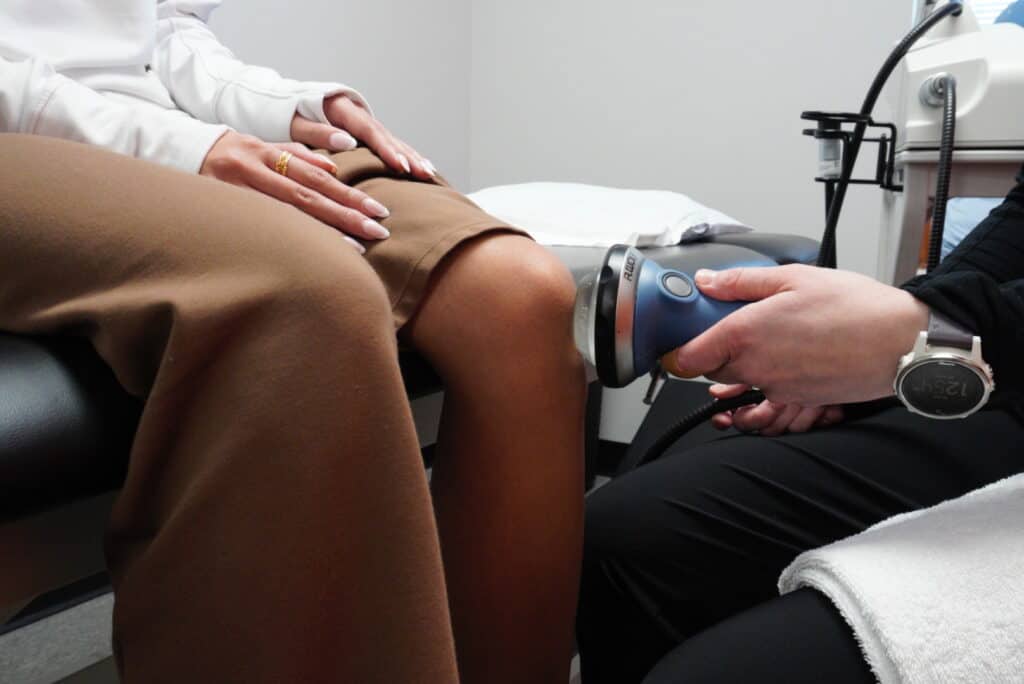
- Use ice and gentle soft tissue work on the outer knee and thigh to settle symptoms after activity.
- Start hip and glute strength early, even at low effort, so the band gets the support it has been missing.
- Check your shoes and your routes, and vary the surface and direction you run.
If a few days of self-care do not change anything, that is your signal to get assessed. A focused plan beats guessing, and it keeps you from losing weeks of training.
Does Foam Rolling Help IT Band Syndrome?
Foam rolling can ease symptoms in the short term by reducing tenderness and helping you feel looser before a session. It does not lengthen the band or fix the underlying control problem, so rolling alone usually is not enough. Use it as a warm-up or a calm-down tool, not as your whole plan. Roll the muscles around the band, including the glutes and quads, rather than grinding directly on the painful outer knee.
What Exercises Fix IT Band Syndrome?
The exercises that fix IT band syndrome build strength and control in the hips and core, so your knee stops taking the load. Start with the basics, keep everything pain-free, and progress as you get stronger. Quality matters more than reps here, so move with control.
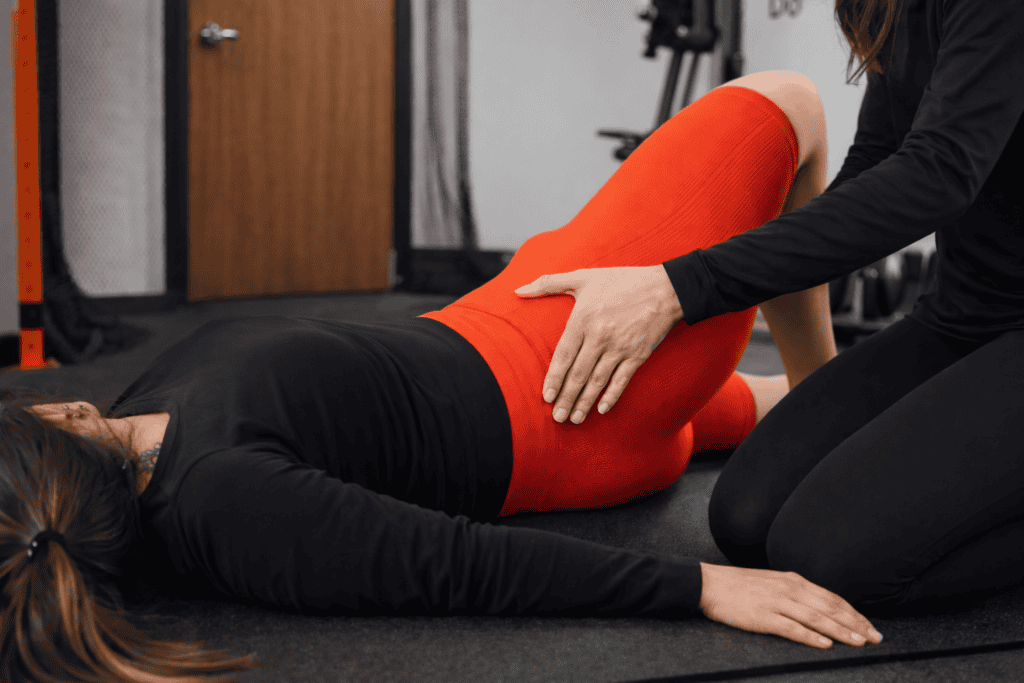
- Side-lying hip abduction. Lie on your side and lift the top leg slightly behind you. This targets the outer hip muscles that stabilize your stride.
- Glute bridges. Drive through your heels to lift your hips, squeezing the glutes at the top. Progress to a single-leg version as you improve.
- Step downs. Stand on a low step and slowly lower the opposite foot toward the floor, keeping your knee tracking over your toes.
- Single-leg balance. Stand on one leg and hold steady, then add small reaches to challenge control.
- Side planks with a leg lift. Build lateral core and hip strength together so your pelvis stays stable when you run.
The key is matching these to your level and your sport. Too little and nothing changes. Too much too soon, and the flare returns. This is where guided progression makes the difference, because the exercises only work when the dose fits you.
How Long Does IT Band Syndrome Take to Heal?
Most cases of IT band syndrome improve within four to eight weeks with the right plan, though mild cases can settle faster and stubborn ones take longer. The timeline depends on how long it has been going on, how quickly you address the cause, and how well you manage your training while you heal. The table below gives a realistic picture.
| Severity | What it feels like | Typical recovery |
|---|---|---|
| Mild and recent | Pain only late in long or downhill runs | 2 to 4 weeks |
| Moderate | Pain earlier in most runs, lingers a bit after | 4 to 8 weeks |
| Stubborn or long standing | Pain with daily activity such as stairs | 8 weeks or more with a structured plan |
Trying to push through at full mileage usually drags the timeline out. A short, smart adjustment now often gets you back to full training faster than ignoring it.

Can You Keep Running With IT Band Syndrome?
You can often keep running with IT band syndrome if you stay under the distance and grade that triggers pain. The goal is to keep the load low enough that the tissue settles while you build the strength that protects it. We help you find that line so you maintain fitness instead of stopping cold. For many runners, a few weeks of adjusted training plus targeted strength is all it takes.
When Should You See a Physical Therapist for IT Band Syndrome?
See a physical therapist if your outer knee pain has lasted more than a couple of weeks, keeps returning, or is cutting your runs short. You do not need to wait until you cannot move. The sooner we find out why your hip is not protecting your knee, the sooner you get back to training without the flare hanging over every session.
At RecoverRx, every visit is one-on-one with a Doctor of Physical Therapy. We assess your strength, your single-leg control, and your running mechanics, then build a plan that fits your goals and your schedule. You keep moving while you heal, and you leave knowing exactly what to do next. Our running injury rehab program is built for active people who refuse to lose their fitness to an overuse injury.
Move Better Without Losing Your Training
IT band syndrome responds well to the right plan, and you do not have to figure it out alone. We help runners and active adults across Oak Brook, Westmont, and Naperville calm the pain, fix the cause at the hip, and return to the miles they love. No pushing through pain, no cookie-cutter handouts, just a clear path back.
Request an Appointment
If outer knee pain is slowing you down, let us help you get ahead of it. Call us at 331-253-2426 or schedule your visit to start a plan built around your body and your goals. Feel better, move better, and get back to what you love.
Frequently Asked Questions
What is the fastest way to relieve IT band syndrome?
The fastest relief comes from reducing the activities that compress the outer knee while starting gentle hip strengthening right away. Cut back on downhill and very long runs, keep moving in pain-free ways like easy cycling, and use ice after activity. This calms symptoms while you build the strength that prevents the next flare.
Should I stretch or strengthen for IT band syndrome?
Strengthening matters more than stretching for IT band syndrome. The pain usually comes from hip muscles that cannot control your leg, so hip and core strength fixes the root cause. Stretching and rolling can ease symptoms, but they do not solve the problem on their own.
Is it OK to run with IT band syndrome?
You can often keep running if you stay below the distance and grade that triggers your pain. Keeping the load low lets the tissue settle while you strengthen the hip. If pain starts early in every run or lingers all day, it is time to get assessed before it worsens.
How long does IT band syndrome last?
Most cases improve within four to eight weeks with the right plan. Mild, recent cases can settle in two to four weeks, while long-standing cases take longer. Addressing the cause early and managing your training are what shorten the timeline.
What happens if IT band syndrome goes untreated?
Untreated IT band syndrome tends to get worse and more frequent, eventually showing up with everyday activities like stairs. The longer it lingers, the more training you lose and the longer recovery can take. Early, targeted care almost always means a faster and smoother return.
Can a physical therapist fix IT band syndrome without surgery?
Yes, the large majority of IT band syndrome cases resolve with physical therapy and never need surgery. A focused plan that builds hip and core control, manages your load, and addresses your running mechanics resolves the problem for most people. Surgery is rare and reserved for cases that do not respond to a thorough rehab plan.