Temporomandibular Joint (TMJ)
Pain & Disorders
Are you tired of jaw pain controlling your life?
What We Do for TMJ Pain to Help You Find Relief Fast
Relieve jaw tension and pressure that’s been building for weeks, months, or even years
Learn how to move your jaw, eat, and sleep without triggering pain
Wake up feeling refreshed and get through your day without constant jaw tightness, clicking, or aching
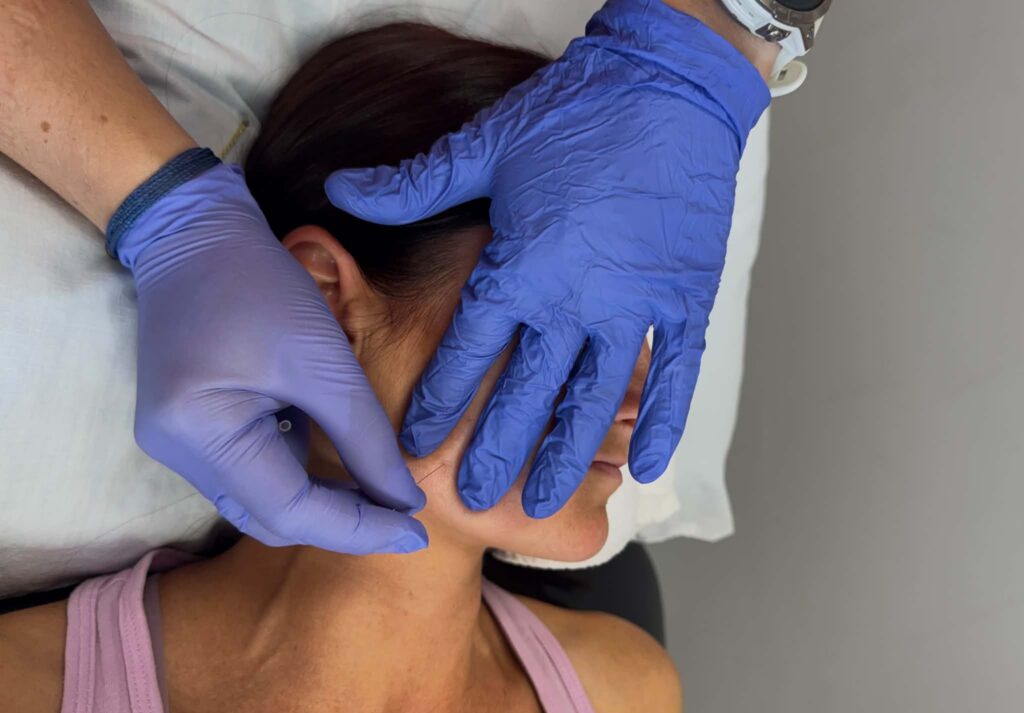
Is TMJ pain or jaw tension making it hard to chew, yawn, open your mouth wide, speak comfortably, sleep, or get through your normal daily activities without discomfort?
Does this sound like you?
- You thought your jaw pain or clicking would go away in a few days or weeks, but it didn't?
- You tried heat, ice, or at-home treatments, but nothing seemed to help?
- You tried massages or other treatments, but the jaw tension and pain kept coming back?
- You visited a doctor who recommended medication or other treatments, but the relief didn't last?
- You tried physical therapy in the past, but it didn't improve your TMJ symptoms?
- You started avoiding certain foods, chewing, or opening your mouth wide because you thought you just had to live with the discomfort?
We are here to help you find long term solutions!
Typical Neck Conditions we Treat:
- Jaw Pain & Clicking
- Limited Jaw Mobility
- Facial Muscle Tension
- Headaches & Neck Pain
Common Causes
- Impaired Jaw Mechanics: Stiffness in the TMJ or tightness in the surrounding muscles can limit jaw movement, affect your bite, and contribute to pain or clicking.
- Injury: Trauma to the jaw, face, or head can irritate the joint and surrounding tissues, leading to pain, inflammation, and difficulty opening or closing the mouth.
- Chronic Compensations: Teeth grinding, clenching, poor posture, or avoiding certain jaw movements can place extra stress on the TMJ and surrounding muscles, leading to ongoing tension and discomfort.
RecoverRx Performance Physical Therapy Approach
- Break the pain cycle through education, manual therapy, and increasing tissue mobility
- Improve the mechanics of the joints, muscles, and nerves in the area during daily functional tasks and exercise/sport specific activities
- Load the tissue to improve strength, power, and endurance to ensure that the tissues are prepared for all desired demands without being fearful of reinjury.
TMJ & Jaw Specific Treatments
Improve jaw, neck, and upper back posture to reduce stress on the TMJ
Decrease tension in the jaw, face, and upper neck muscles
Improve flexibility in the jaw, neck, and surrounding muscles
Restore joint mobility through manual therapy, joint mobilizations, and gentle traction
Improve coordination and strength of the jaw, deep neck flexors, and shoulder blade muscles
Improve tissue mobility through massage, instrument-assisted soft tissue mobilization, cupping, and dry needling
Reduce sensitivity and discomfort associated with jaw movement, facial pain, and headaches through targeted exercises
Progress functional activities like chewing, talking, yawning, and opening and closing the mouth comfortably
Address persistent pain and tissue irritation with shockwave therapy when appropriate
Important Things to Understand
- Tissues Heal. The body is designed to repair itself, but sometimes our system gets stuck in the inflammatory phase of tissue repair and needs a little help to move onto the recovery phase
- The true source of pain is often poorly correlated with x-ray and MRI imaging results. It is possible to have tissue damage on imaging that causes no pain or functional limitations. And it is possible to have pain with no visible findings on imaging – usually a result of nervous tissue over sensitivity.
- Soreness after exercise is not the goal, but it is also not always a sign of concern. True strength gains require an overload to the system which causes micro-damage. As that tissue recovers, it does so thicker and stronger than before. Soreness should be used as a way to monitor if the tissue is ready to take on more load, should stay at the current level, or should back down training intensity until the tissue is more prepared.
- Return to previous/desired activities is almost always possible through good education, proper mechanics, and progressive tissue loading.
